
Australia’s dental landscape is undergoing a quiet yet profound transformation. What was once a field primarily focused on restoration and oral health has evolved into a sophisticated fusion of science, art, and digital precision. At the heart of this shift lies cosmetic dentistry’, a discipline that is no longer confined to aesthetics alone but increasingly intersects with technology, psychology, and personalised healthcare. Across cities like Sydney, Melbourne, and Brisbane, patients are seeking more than just brighter smiles—they are pursuing identity, confidence, and long-term wellbeing through digitally enhanced treatment pathways.
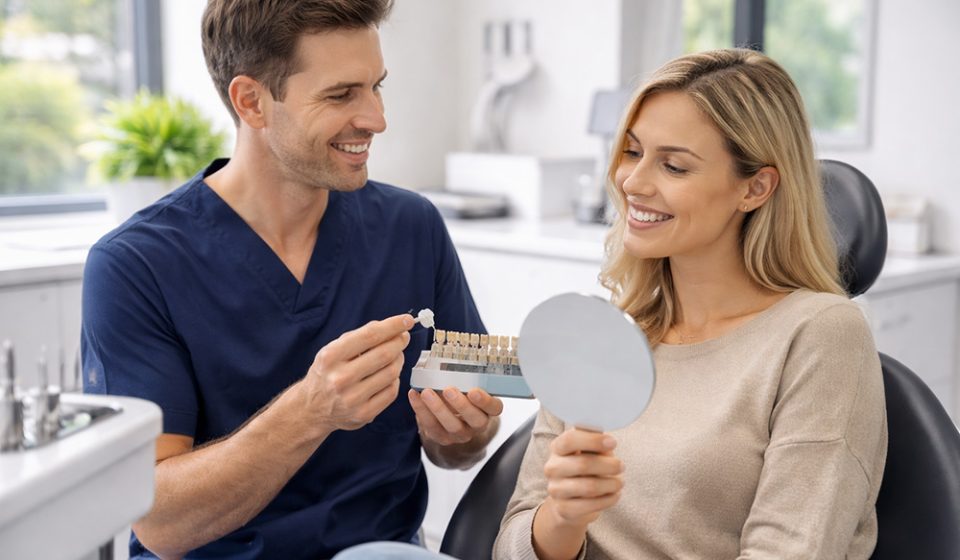
One of the most significant drivers of this evolution is the rise of digital smile design (DSD). This technology enables clinicians to map a patient’s facial features, dental structure, and even personality traits into a comprehensive visual simulation before any procedure begins. Using high-resolution imaging, 3D scanning, and AI-assisted modelling, dentists can now predict outcomes with remarkable accuracy. For Australian patients, this means fewer surprises and greater involvement in decision-making. The consultation process becomes collaborative, almost cinematic, where patients preview their future smiles and refine them in real time.
This digital shift is also redefining clinical workflows. Intraoral scanners have largely replaced traditional impressions, eliminating discomfort while improving precision. CAD/CAM systems allow same-day restorations, significantly reducing treatment time. In a country where convenience and efficiency are highly valued, these innovations resonate strongly. The modern Australian patient expects seamless experiences, and dental practices are responding by integrating technology that mirrors the speed and sophistication of other industries.
However, the impact of digital innovation extends beyond clinical tools. It is reshaping how knowledge is shared and consumed within the profession. The growing popularity of dentistry podcasts has created a dynamic ecosystem of continuous learning and peer engagement. Australian dentists are increasingly tuning into global conversations about techniques, materials, and patient communication strategies. These podcasts often blend clinical insights with business acumen, reflecting the dual role of practitioners as both healthcare providers and entrepreneurs.
This cultural shift toward open dialogue and knowledge exchange is particularly important in a field as rapidly evolving as cosmetic dentistry’. Trends that emerge in Los Angeles or London can quickly influence practices in Perth or Adelaide. Yet, Australian dentistry maintains its unique identity, shaped by stringent regulatory standards, multicultural patient demographics, and a strong emphasis on ethical care. The result is a balanced approach that embraces innovation without compromising patient safety.
Another defining trend is the integration of minimally invasive techniques. Advances in materials science have enabled thinner veneers, more durable composites, and biologically compatible solutions that preserve natural tooth structure. Australian patients are increasingly aware of the long-term implications of dental work, favouring treatments that offer both aesthetic enhancement and functional integrity. This aligns with a broader societal movement toward sustainability and preventive care.
Interestingly, the concept of beauty itself is evolving within Australian cosmetic dentistry. There is a noticeable shift away from uniform, overly “perfect” smiles toward more natural, individualised aesthetics. Patients are seeking results that complement their facial features and cultural identity rather than conforming to a single ideal. Digital tools play a crucial role here, enabling nuanced adjustments that reflect subtle variations in tooth shape, colour, and alignment.
The role of artificial intelligence is also expanding within dental practices. AI-driven diagnostics can detect early signs of decay, gum disease, and structural anomalies with a level of consistency that enhances clinical judgement. When combined with digital imaging, these tools provide a comprehensive view of oral health, allowing for more precise treatment planning. In the context of cosmetic dentistry’, this means that aesthetic decisions are grounded in robust clinical data rather than subjective interpretation alone.
Marketing and patient engagement have likewise been transformed by digital platforms. Social media has become a powerful showcase for before-and-after transformations, patient testimonials, and educational content. Australian practices are leveraging these channels to build trust and transparency. However, this visibility also demands adherence to strict advertising guidelines, ensuring that claims remain truthful and not misleading. The digital age has amplified both opportunity and accountability.
Looking ahead, the future of smile design in Australia will likely be defined by even greater personalisation. Advances in biotechnology, such as regenerative dentistry and bioengineered tissues, may eventually reduce the need for synthetic materials altogether. Virtual reality could enhance patient consultations, allowing individuals to experience their new smiles in immersive environments before committing to treatment. Meanwhile, the continued growth of dentistry podcasts will ensure that practitioners remain connected to global innovations and evolving patient expectations.
Yet, amidst all this technological progress, the human element remains central. Trust, empathy, and communication are still the foundations of successful dental care. Digital tools can enhance precision and efficiency, but they cannot replace the nuanced understanding that comes from genuine patient relationships. Australian dentists who successfully integrate technology with compassionate care will be best positioned to lead the next phase of the industry.
In essence, cosmetic dentistry’ in Australia is no longer just about improving appearances—it is about redefining the entire patient experience. Through digital innovation, collaborative design, and continuous learning, the field is moving toward a future where every smile is not only beautiful but նաեւ deeply personal and clinically sound.